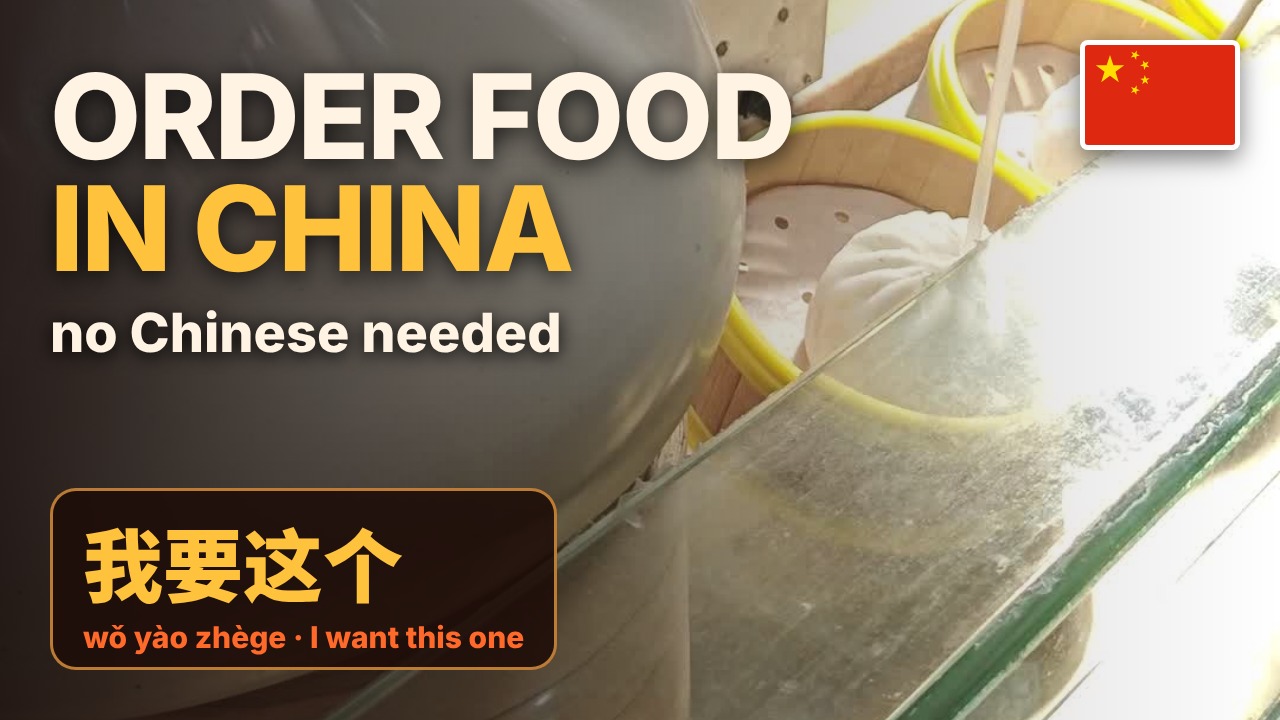
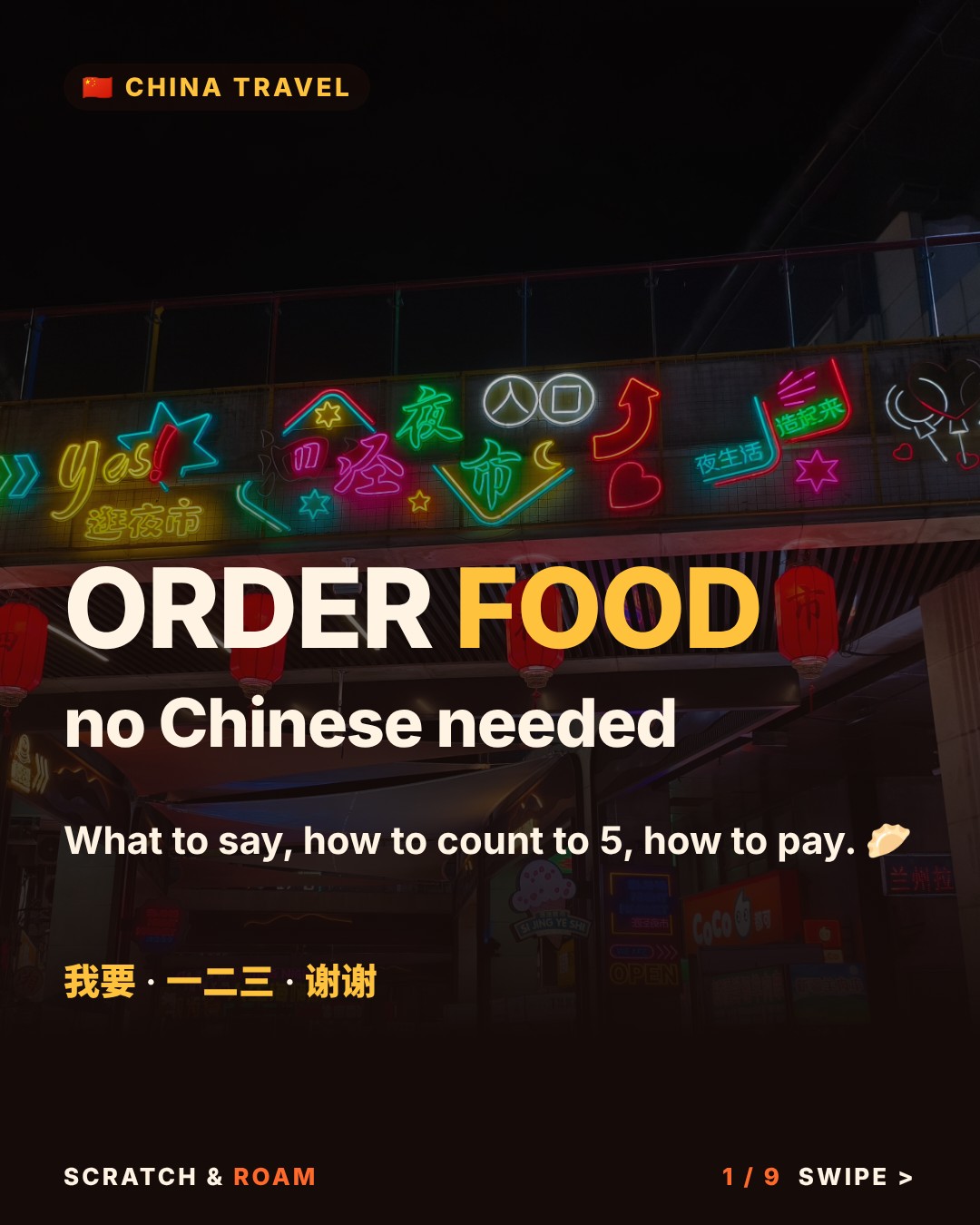
To order food in China without speaking Chinese, point at the dish, say 我要这个 (wǒ yào zhège), show the number with your fingers or say it, ask 多少钱 (duōshao qián), say 谢谢 (xièxie), and pay by QR code or small cash. This guide gives the phrases, the numbers one to five, how to read pinyin as an English speaker, how scan-to-order menus work, how to order at a night market or street stall, and how to pay as a visitor.
It is the written version of my Scratch & Roam video and 9 slides, filmed at a bun stall and at Sijing Night Market in Shanghai. The facts were checked against the sources at the bottom on 26 October 2026. Where sources disagree, or where I could not find one, I say so.
Quick answers
How do you order food in China without speaking Chinese?
Point at the dish, or at someone else's, and say 我要这个 (wǒ yào zhège), I want this one. Show how many with fingers or a typed number, use a translator camera for menus, and pay with a QR code in Alipay or WeChat Pay, or with small cash.
What is scan-to-order in China?
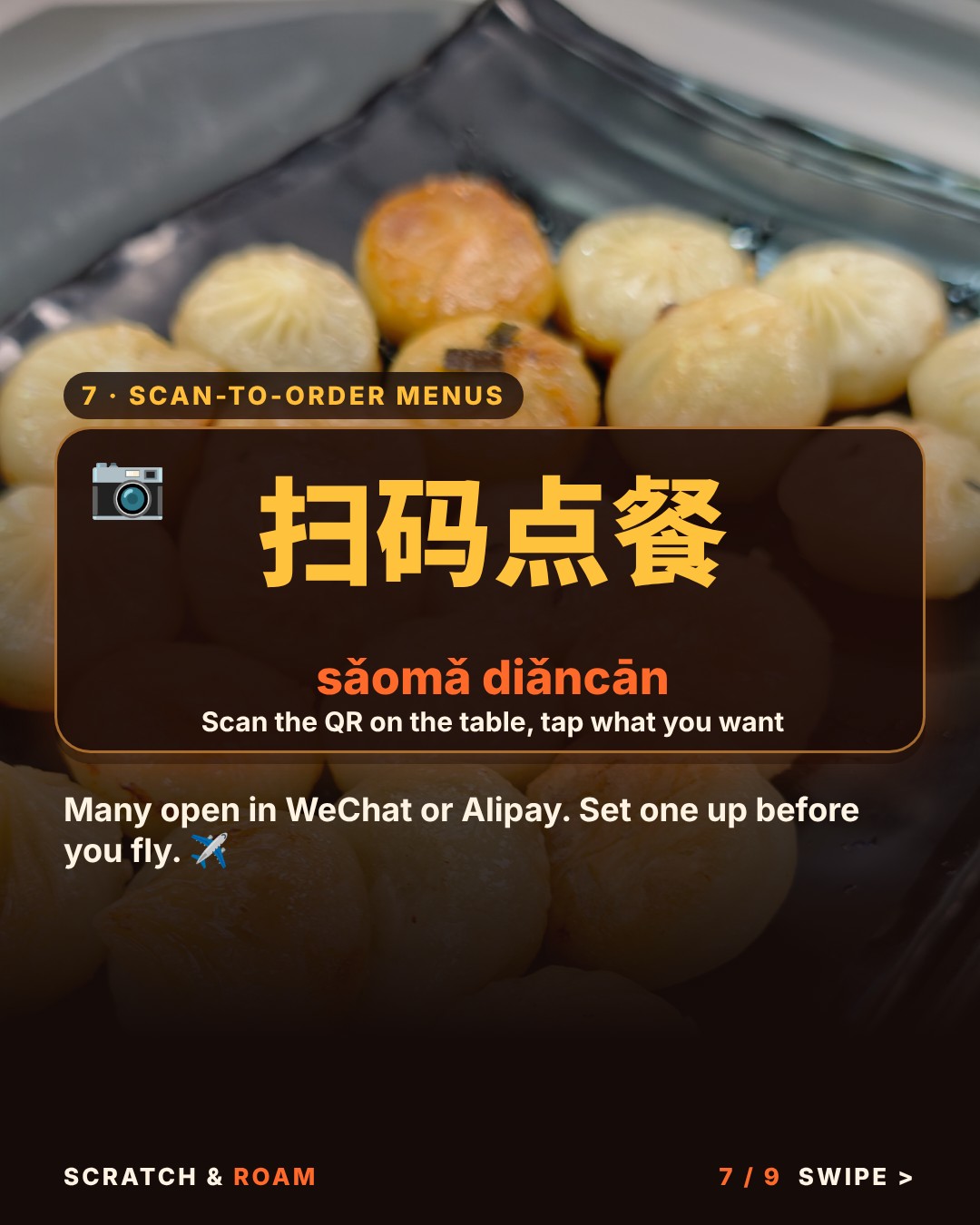
It is a menu you open by scanning a QR code on the table. You order and often pay from your own phone. According to The China Project, the menu opens in a restaurant's mini program or a food app, or asks you to follow the restaurant's WeChat account. Many need WeChat or Alipay, so set one up before you fly.
Can you pay with a foreign card at street food stalls in China?
Do not count on it. China Navigators says foreign credit cards work only at international hotel restaurants and some chains. A People's Bank of China guide says foreign cards can be linked to Alipay and WeChat Pay with a mobile number, which is the usual workaround. Cash also works, but small vendors may lack change.
How do you say takeaway in Chinese?
打包 (dǎbāo) is the standard word for packing up food to take away. It is a phrase I wrote from standard Mandarin, not copied from a guide, so check it in a translator app.
Is it rude to point at food in China?
Sources differ. China Navigators calls pointing at another table's dish universally understood. China Highlights says it is somewhat rude, though locals usually excuse foreigners. At a stall, pointing at the food for sale is normal.
How do you say I want, we want and can we have in Chinese?
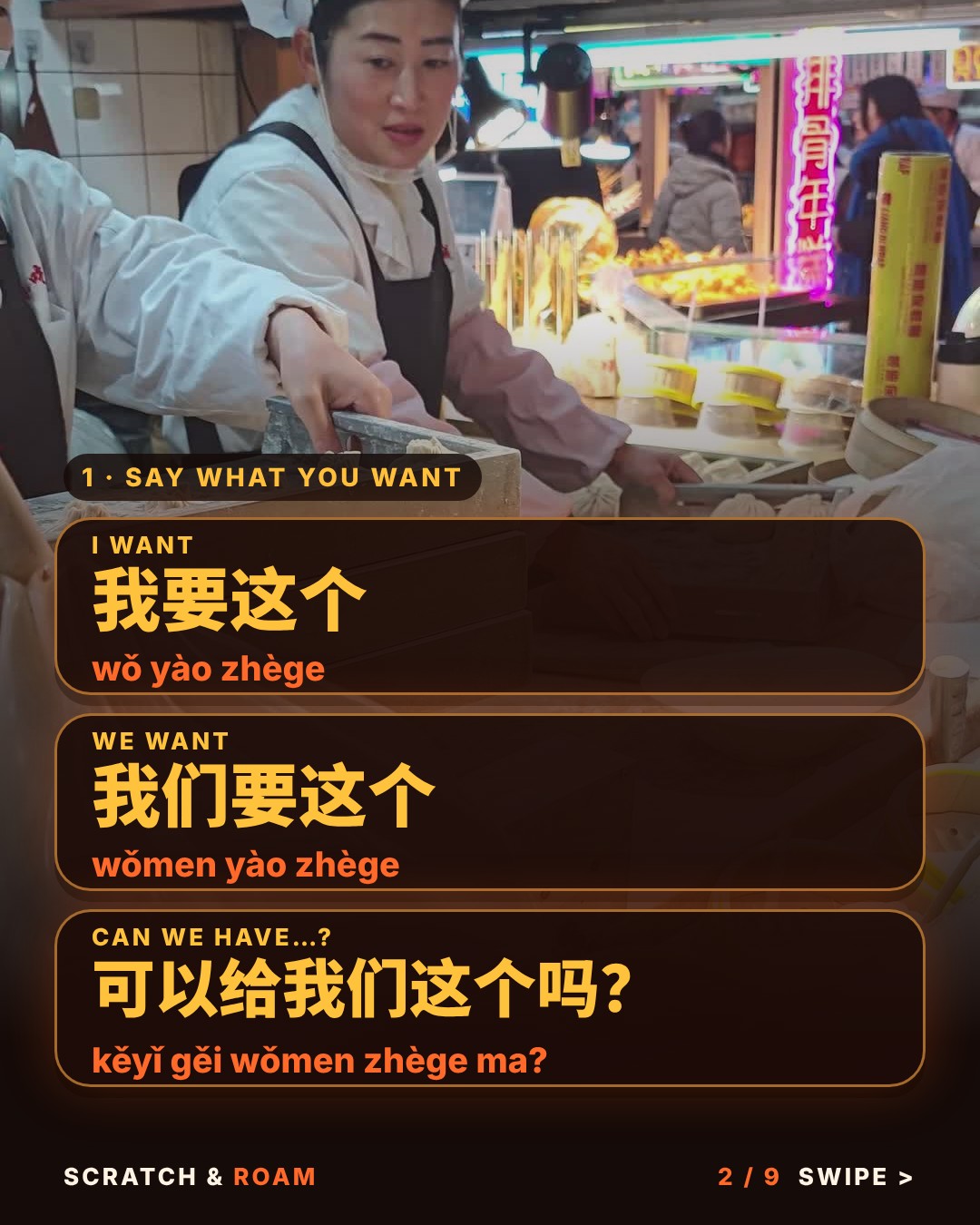
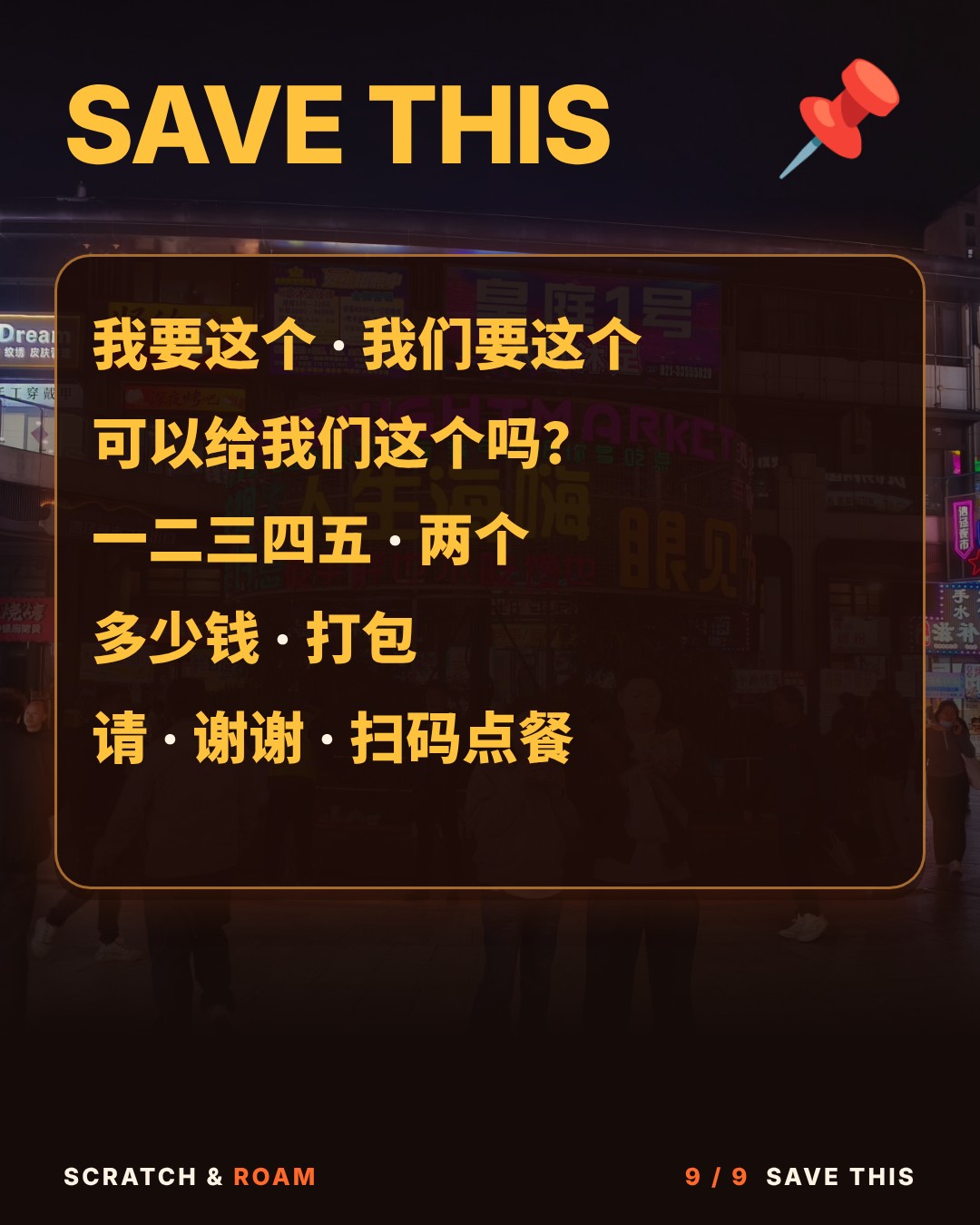
我要这个 (wǒ yào zhège) is I want this one, 我们要这个 (wǒmen yào zhège) is we want this one, and 可以给我们这个吗? (kěyǐ gěi wǒmen zhège ma?) is can we have this? The first pattern is in China Navigators. The other two are standard Mandarin that I wrote myself.
How do you count one to five in Chinese when ordering?
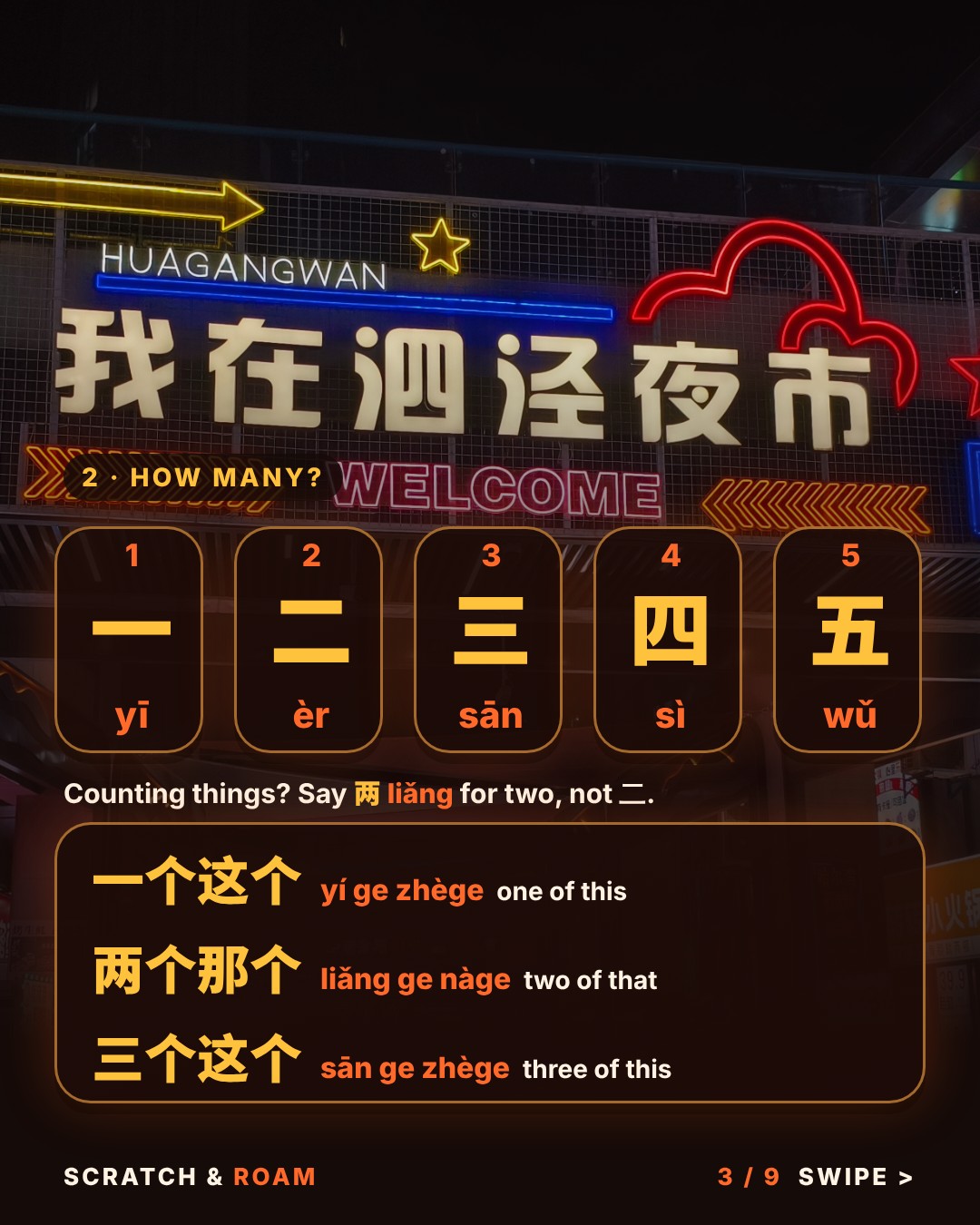
一 二 三 四 五 (yī, èr, sān, sì, wǔ). When you count things, say 两 (liǎng) for two, then 个 (ge): 一个这个 is one of this, 两个那个 is two of that, 三个这个 is three of this.
How do you say please and thank you in Chinese?
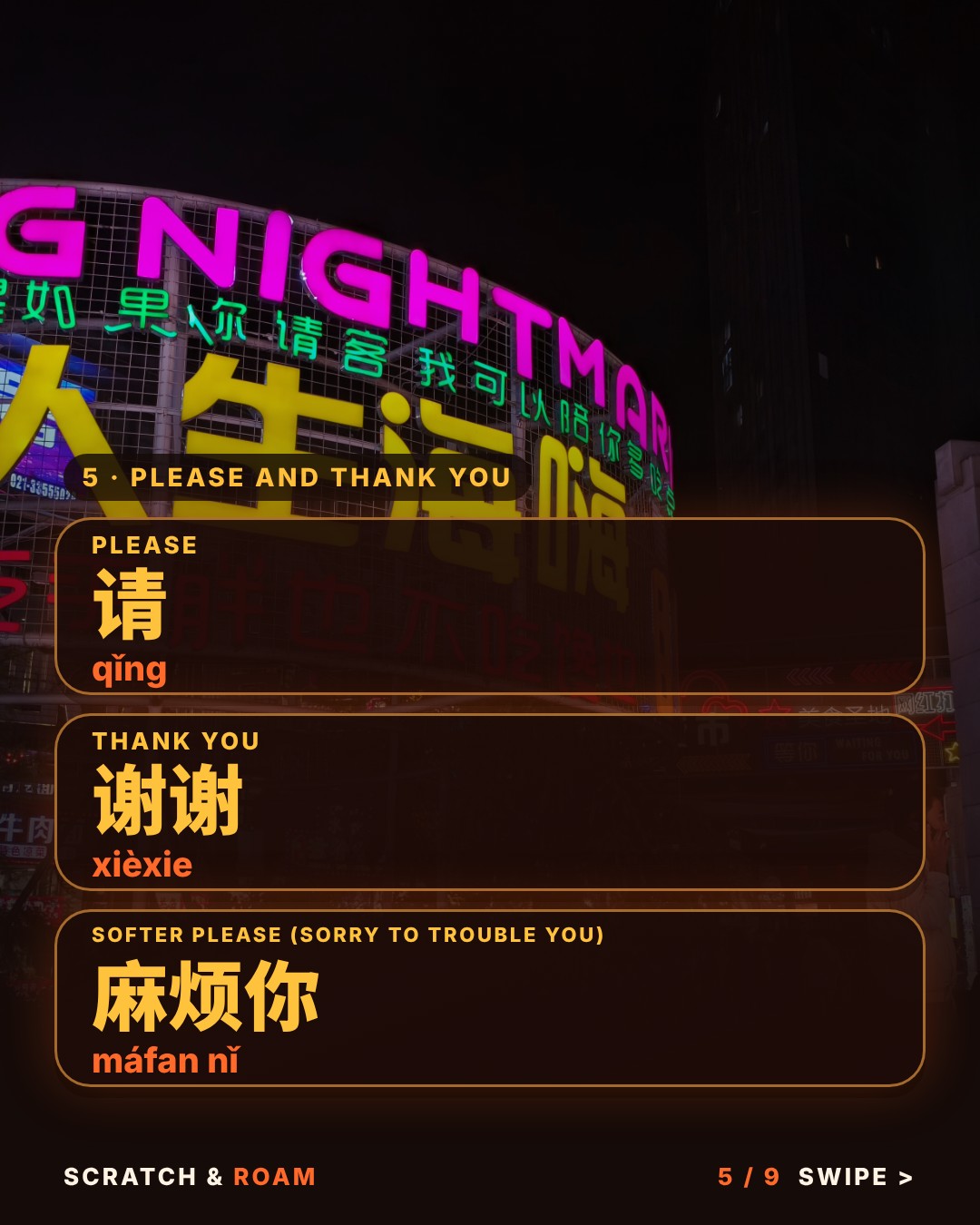
请 (qǐng) is please, 谢谢 (xièxie) is thank you, and 麻烦你 (máfan nǐ) is a softer please. These are standard Mandarin that I wrote myself.
What do you say to ask for no spice in Chinese?
不要辣 (bù yào là), from China Navigators. China Highlights gives 我不要辣 for no chillies. For a full guide to spice levels, read the spice tolerance guide.
How to order, step by step
- 1
Load a translator camera before you fly
China Navigators calls Baidu Translate's camera mode the most accurate free tool for reading Chinese menus live, and says to download the offline Chinese pack before you travel. Hold the camera steady for 2 to 3 seconds, use your phone torch in a dim restaurant, and scan a long menu in sections. It says Google Translate's camera is less accurate for Chinese.
- 2
Set up Alipay or WeChat Pay at home
Scan-to-order menus and most stall QR codes run on one of these two apps, so set one up before the trip. See the payment section below for what the sources say about foreign cards.
- 3
Say what you want: I want, we want, can we have
Point at the dish and say 我要这个 (wǒ yào zhège), I want this one. For a group, say 我们要这个 (wǒmen yào zhège), we want this one. To ask politely, say 可以给我们这个吗? (kěyǐ gěi wǒmen zhège ma?), can we have this? China Navigators gives the first pattern with 那个 (nà gè), that one, and calls it universally understood. The other two are standard Mandarin that I wrote myself.
- 4
Count one to five, and say how many
一 二 三 四 五 (yī, èr, sān, sì, wǔ) are one to five. For counting things, Mandarin uses 两 (liǎng) for two, not 二, and adds 个 (ge) after the number. So 一个这个 (yí ge zhège) is one of this, 两个那个 (liǎng ge nàge) is two of that, and 三个这个 (sān ge zhège) is three of this. China Highlights gives 一份 (yī fèn), one portion, and 一笼 (yī lóng), one tray of dumplings. I have not found a source for the hand signs for 6 to 10, so I do not teach them here.
- 5
Ask the price
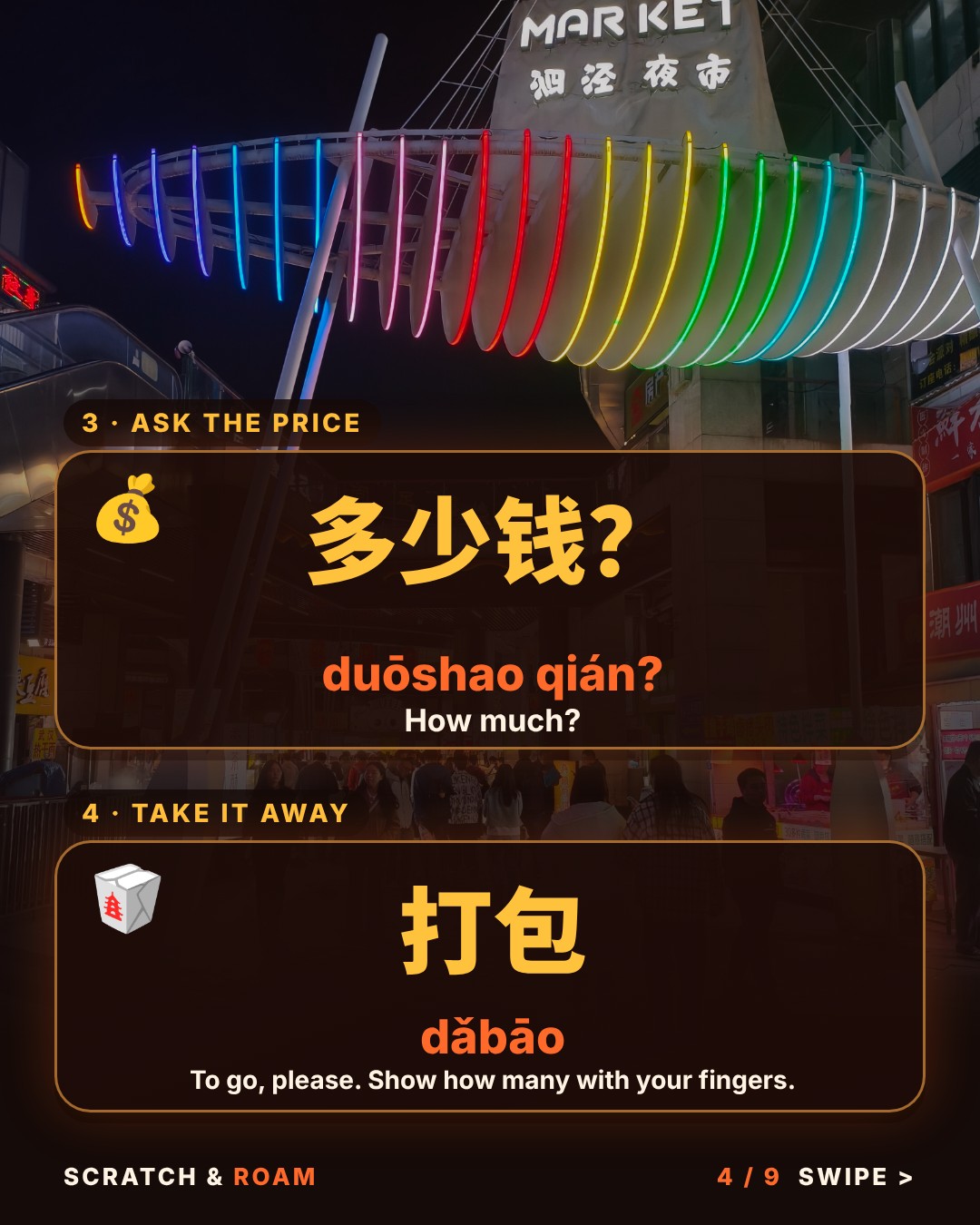
多少钱? (duōshao qián?) means how much? It is standard Mandarin that I wrote myself, not copied from a guide. Show it on your phone if you are unsure of the pronunciation.
- 6
Take it away with 打包
打包 (dǎbāo) means to pack up, which is what you say for takeaway. Also my own standard-Mandarin phrase, so check it in a translator app first.
- 7
Say please and thank you
请 (qǐng) is please, 谢谢 (xièxie) is thank you, and 麻烦你 (máfan nǐ) is a softer please that means sorry to trouble you. These are my own standard-Mandarin phrases. My note, not a source's: shop and stall staff often skip please, so a smile and 谢谢 do most of the work.
- 8
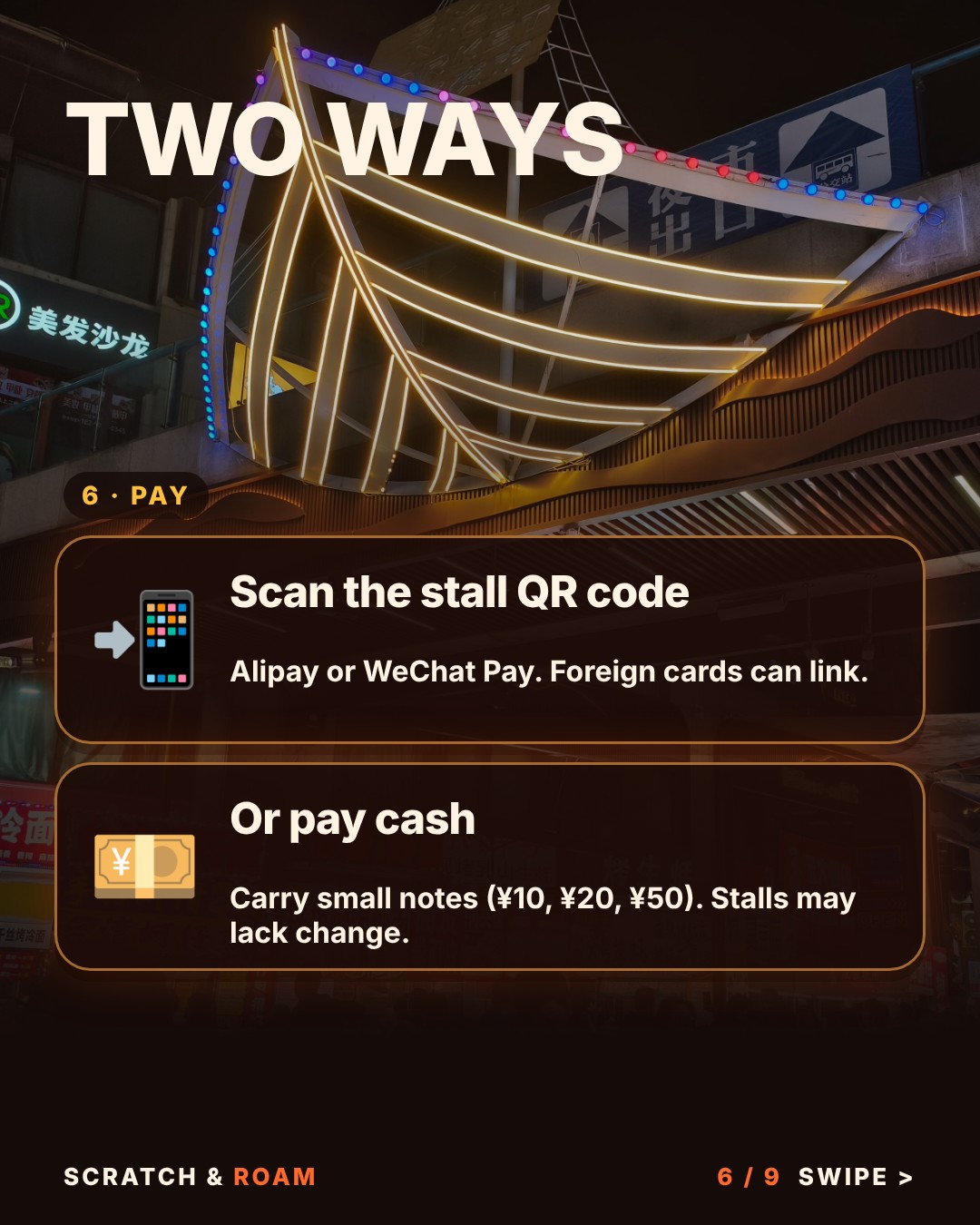
Pay by QR code, or with small cash
Scan the stall's QR code in Alipay or WeChat Pay, or pay cash. Trip.com says small vendors often lack change, so carry ¥10, ¥20 and ¥50 notes and avoid ¥100.
Nineteen phrases to point at, say or show on your phone
You do not need to pronounce these well. Show the characters, point, and use your fingers for numbers. The "say it like" column is my own rough English respelling, so treat it as a guide and not as exact.
| Chinese | Pinyin | Say it like | Meaning | Where it is from |
|---|---|---|---|---|
| 我要这个 | wǒ yào zhège | waw yow jer-guh | I want this one | Mine. China Navigators gives the same pattern with 那个 (that one). |
| 我们要这个 | wǒmen yào zhège | waw-men yow jer-guh | We want this one | Mine, standard Mandarin. |
| 可以给我们这个吗? | kěyǐ gěi wǒmen zhège ma? | kuh-yee gay waw-men jer-guh mah? | Can we have this? | Mine, standard Mandarin. |
| 我要那个 | wǒ yào nà gè | waw yow nah-guh | I want that one (point at someone else's dish) | China Navigators |
| 一 二 三 四 五 | yī èr sān sì wǔ | ee, are, sahn, sss-uh, woo | One to five | Mine, standard Mandarin. |
| 两个 | liǎng ge | lyahng guh | Two of (use 两, not 二, when counting things) | Mine, standard Mandarin. |
| 一个这个 / 两个那个 / 三个这个 | yí ge zhège / liǎng ge nàge / sān ge zhège | ee guh jer-guh / lyahng guh nah-guh / sahn guh jer-guh | One of this, two of that, three of this | Mine, standard Mandarin. |
| 一份 | yī fèn | ee fuhn | One portion | China Highlights |
| 一笼 | yī lóng | ee lohng | One tray (of dumplings) | China Highlights |
| 多少钱? | duōshao qián? | dwaw-shaow chyen? | How much? | Mine, standard Mandarin. |
| 打包 | dǎbāo | dah-bow (as in bow-wow) | Takeaway, to go | Mine, standard Mandarin. |
| 请 | qǐng | cheeng | Please | Mine, standard Mandarin. |
| 谢谢 | xièxie | shyeh-shyeh | Thank you | Mine, standard Mandarin. |
| 麻烦你 | máfan nǐ | mah-fahn nee | Sorry to trouble you (a softer please) | Mine, standard Mandarin. |
| 扫码点餐 | sǎomǎ diǎncān | sow-mah dyen-tsahn | Scan the code to order | Mine, standard Mandarin. |
| 不要辣 | bù yào là | boo yow lah | No spice | China Navigators |
| 不要猪肉 | bù yào zhūròu | boo yow joo-roh | No pork | China Navigators |
| 最受欢迎的是什么? | zuì shòu huānyíng de shì shénme? | dzway show hwahn-ying duh shur shum-muh? | What is most popular? | China Navigators |
| 买单 | mǎidān | my-dahn | The bill | China Navigators |
Where a source is named, I copied the phrase from it. Where it says mine, it is standard Mandarin I wrote myself. Check any phrase in a translator app before you rely on it.
Numbers one to five, and how many
Point, then show the number with your fingers or say it.
- 一 二 三 四 五yī, èr, sān, sì, wǔOne to five (ee, are, sahn, sss-uh, woo)
- 一个这个yí ge zhègeOne of this
- 两个那个liǎng ge nàgeTwo of that
- 三个这个sān ge zhègeThree of this
When you count things, say 两 (liǎng) for two, not 二 (èr). The pattern is number, then 个 (ge), then the thing: 这个 is this one and 那个 is that one. This is standard Mandarin grammar that I wrote myself, not copied from a guide.
How to read pinyin if you are English
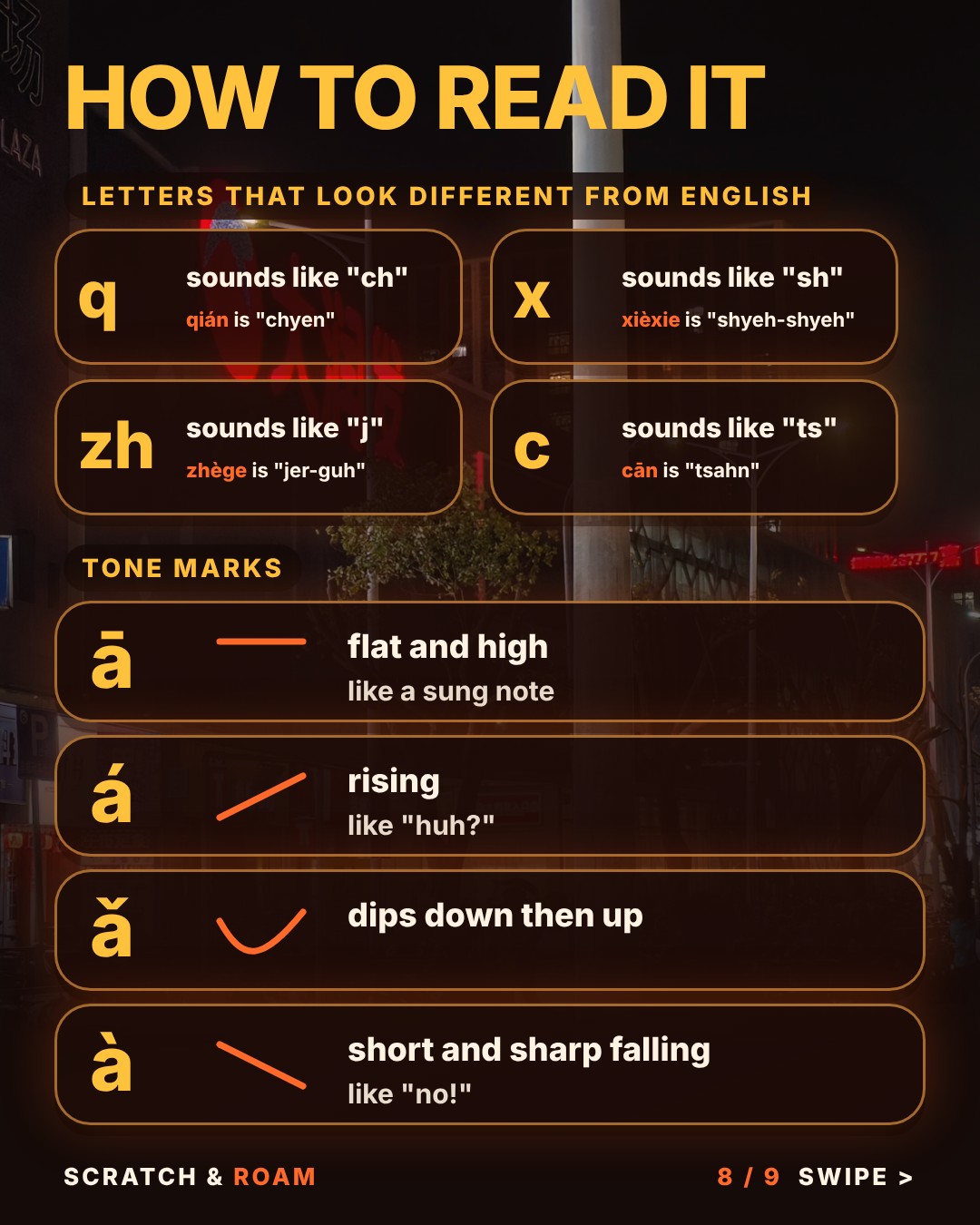
Pinyin is Chinese written in English letters, but a few letters sound different from English, and the marks above the vowels are tones.
Letters that look different from English
- q sounds like "ch": qián is "chyen".
- x sounds like "sh": xièxie is "shyeh-shyeh".
- zh sounds like "j": zhège is "jer-guh".
- c sounds like "ts": cān is "tsahn".
Tone marks
- ā is flat and high, like a sung note.
- á is rising, like "huh?".
- ǎ dips down then up.
- à is short and sharp falling, like "no!".
These are my own simple English respellings, approximate on purpose. If you get a tone slightly wrong, pointing and a smile still work.
Scan-to-order menus
In many restaurants you do not get a paper menu. You scan a QR code on the table, order from your own phone, and pay there too.
How it works
The China Project (Siyuan Meng, 18 November 2021) says diners scan a code to see the menu, order from their phones and pay separately. The menu opens in the restaurant's own mini program or a food service app such as Meituan, or you are asked to follow the restaurant's WeChat account. China Navigators (23 March 2026) says it is common in Beijing, Shanghai, Guangzhou and Chengdu, that you scan the table sticker with WeChat, and that most items have photos.
The catch for visitors
The China Project notes that digital menus often require scanning through WeChat or Alipay, and says some people may be shut out. It does not say what a visitor without those apps should do. My advice, not a source's: set up one of the apps before you fly, and if it will not open, ask the staff for a paper menu or point at food.
Night markets: point, count, pay
At a stall there is no menu to scan. You point at the food, say how many, and pay.
The night-market photos in this guide are from Sijing Night Market in Songjiang, Shanghai. The Shanghai government's English site (7 December 2023) gives the address as Sanxiang Square, No 2 Sibao Road, describes it as Shanghai's biggest open-air night market, and lists regional specialities such as sweet potato starch grilled rolls, oyster pancakes and Taiwan-style lemon tea. It does not give opening hours, so check before you go.
- 我要这个 / 我们要这个wǒ yào zhège / wǒmen yào zhègePoint at it
- 一份 / 一笼yī fèn / yī lóngOne portion or one tray
- 多少钱?duōshao qián?Ask the price
- 打包dǎbāoTakeaway
Two sources disagree on pointing at other diners' food. China Navigators calls it universally understood. China Highlights says it is somewhat rude, though locals usually excuse foreigners. At a stall, pointing at the food for sale is normal. At a restaurant table, be polite about it.
How to pay for street food and restaurant meals
China Navigators says both are accepted at almost all restaurants in Chinese cities. Trip.com calls Alipay the most reliable option for street food, scanning the printed code on the table or the vendor's own QR code.
Source: China Navigators; Trip.comA People's Bank of China payment guide (reported by China Briefing, March 2024) says foreign cards can be linked with just a mobile number, and that single-transaction limits rose from US$1,000 to US$5,000. Trip.com says tourist Alipay links Visa, Mastercard and JCB, and that WeChat Pay has stricter limits.
Source: China Briefing; Trip.comChina Navigators says cash works everywhere. Trip.com says small vendors often lack change, so carry small notes. The PBOC guide says foreign cards can also take out RMB at ATMs showing the card's logo.
Source: China Navigators; Trip.com; China BriefingChina Navigators says foreign credit cards work only at international hotel restaurants and some chains. Do not count on tapping a card at a market stall.
Source: China NavigatorsAllergies and dietary needs
The phrases for no spice and no pork are from China Navigators. If you have a serious allergy, a phrase is not enough: use a translator card written by a native speaker and ask at a sit-down restaurant, not a busy stall. This is travel advice, not medical advice.
The nine slides
The same guide as a 9 slide carousel, to save for your trip. Tap a slide to open it larger.
Rules change. Everything here was checked on 2026-10-26 against the sources below. Before you fly, open the official page once more.
Sources
- China Navigators: How to order food without English menus, app tips, 23 March 2026
- The China Project, Siyuan Meng: Scan-to-order sweeps across China, to customers' chagrin, 18 November 2021
- China Highlights: how to order Chinese food (no date shown)
- Trip.com: how to pay in China for foreigners (no date shown)
- China Briefing: China unveils new guidelines on optimized payment services for foreigners, 29 March 2024, reporting the People's Bank of China guide
- Shanghai government English site: Sijing Night Market, 7 December 2023 (official)